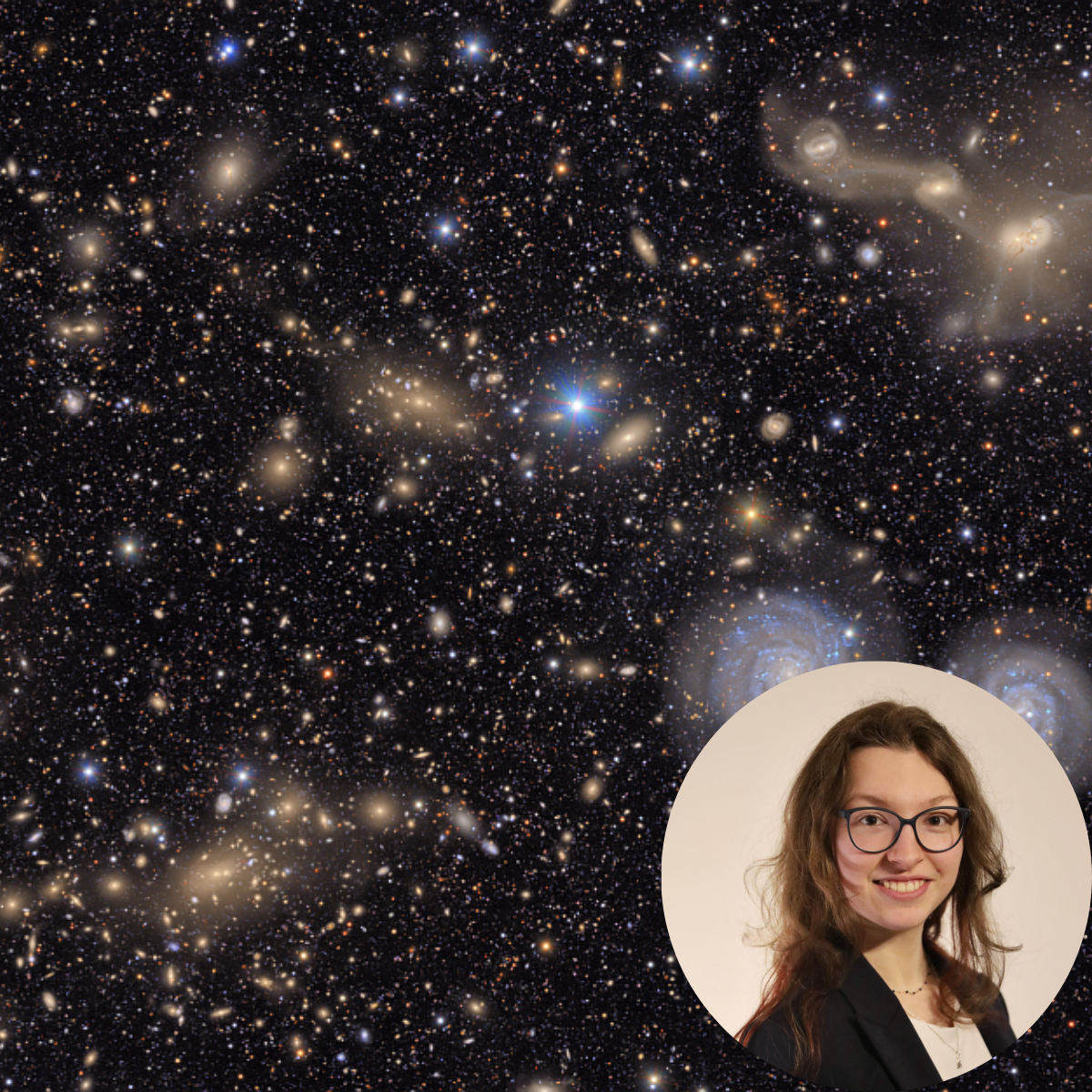
© Bertmann, NSF–DOE Vera C. Rubin Observatory
Public lecture „Das Vera Rubin Observatorium und die dunkle Seite des Kosmos“
We are pleased to invite you to the public lecture “Das Vera Rubin Observatorium und die dunkle Seite des Kosmos " (in German).
Klara Bertmann will take you on a journey to the great mysteries the universe still holds today. Contributing to their unraveling is the new Vera C. Rubin Observatory, which began operations in Chile earlier this year.
When 10.12.25 at 20:00
Where Planetarium Bochum
For registration and further information, please have a look at the Planetarium’s homepage.
Picture:
A small section of the Virgo galaxy cluster as seen by the Vera Rubin observatory
© PBH
Invitation to 5th Graduate School on Astro-Particle Physics
We are happy to advertise the 5th Graduate School on Astro-Particle Physics "Unifying view on cosmic interacting matter"
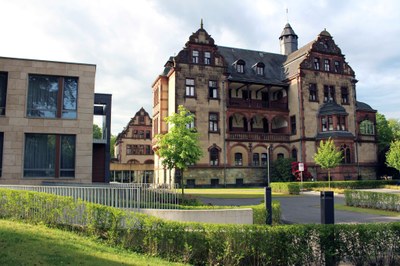
which will take place from January 18 to January 23, 2026 at Physikzentrum Bad Honnef, Germany.
The school is aimed at PhD students and includes lectures on:
- Introduction to Astroparticle physics (Foteini Oikonomou)
- Astrophysical Plasmas and Cosmic Ray Propagation (Daniel Verscharen)
- Cosmic Ray Flux Calculations and Particle Physics Input (Michael Schmelling)
- Radio Astronomy (Laura Spittler)
- Neutrino Astronomy (Dorothea Samtleben)
- Galactic Magnetic Fields (Marijke Haverkorn)
- Multi-Messenger Astronomy (Marek Kowalski)
- Gravitational Waves (Michela Mapelli)
- Introduction to Machine learning with hands-on session
- special highlight: evening lecture by Jocelyn Bell Burnell!
We are extremely grateful to the Wilhelm und Else Heraeus Foundation for its generous support of our school.
Registration is now open and more details can be found here .
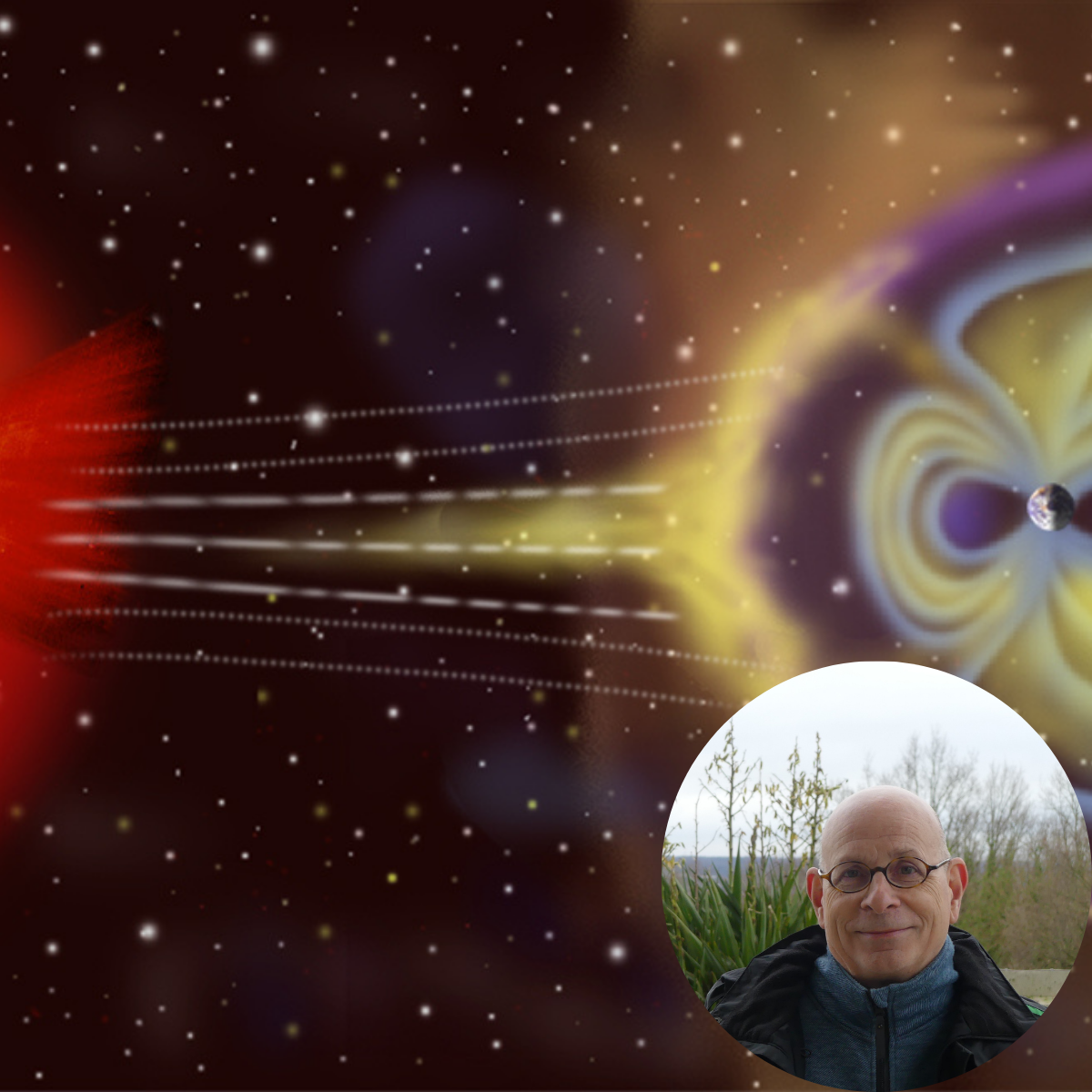
© Fichtner, NASA
Public lecture „Weltraumwetter - was steckt dahinter?“
We are pleased to invite you to the public lecture “Weltraumwetter - was steckt dahinter? " (in German).
Horst Fichtner will answer the question of what ‘space weather’ actually is, whether it has any similarities to weather on Earth, and whether it can even pose a danger to us in extreme cases.
When 26.11.25 at 20:00
Where Planetarium Bochum
For registration and further information, please have a look at the Planetarium’s homepage.
Picture:
The solar wind interacting with the magnetic field of the Earth.
© Dettmar
Early Career Researchers Explore the Effelsberg Radio Telescope
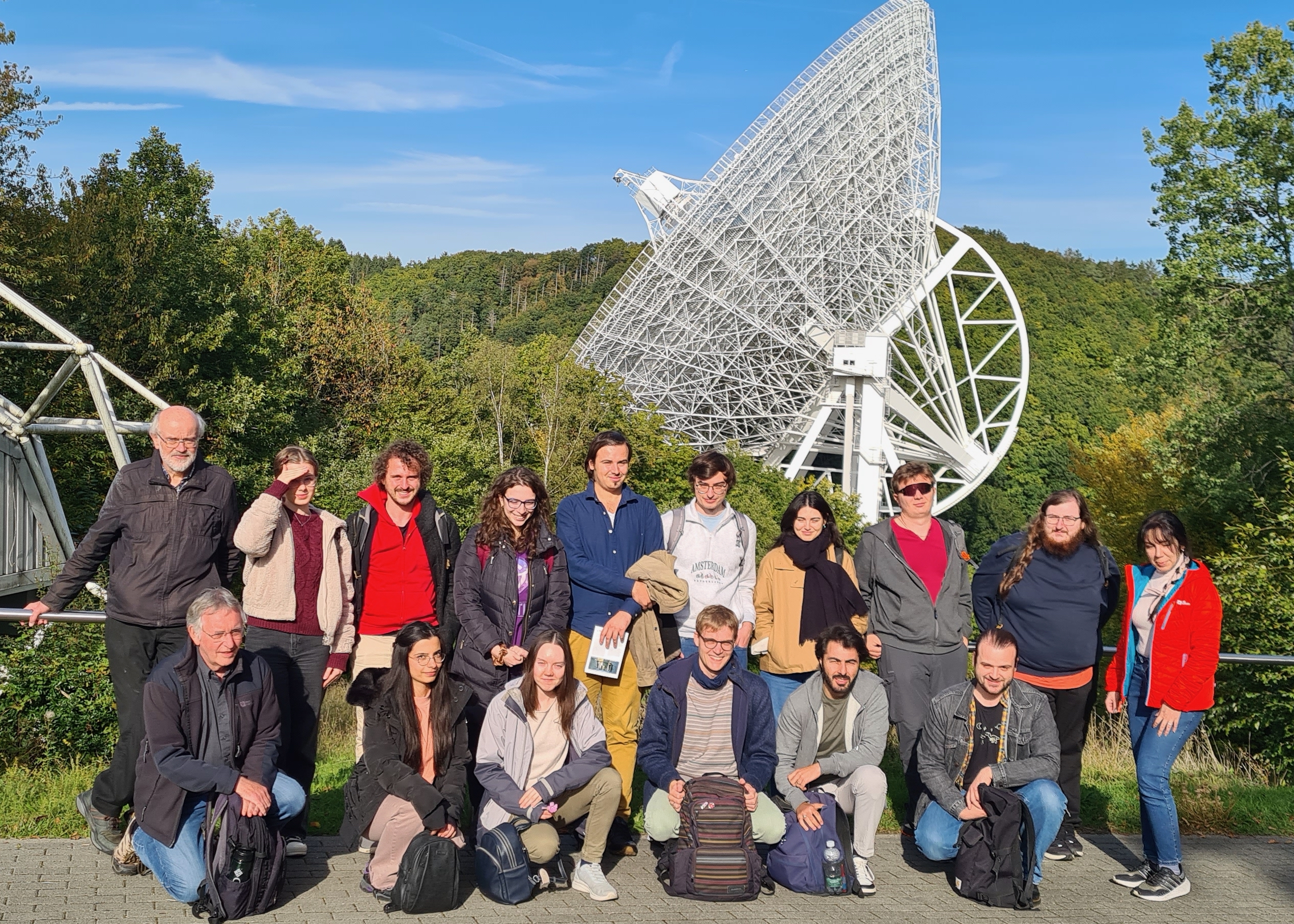
On October 2nd, a group of ECRs from our CRC embarked on an inspiring visit to the Effelsberg Radio Telescope which is one of the world’s largest fully steerable radio telescopes. Operated by the Max Planck Institute for Radio Astronomy (MPIfR), the 100-meter telescope has been a cornerstone of astronomical discovery since the 1970s. Thanks to continuous modernization, it remains a leading observatory in radio astronomy until today.
During the visit, Dr. Norbert Junkes from the MPIfR guided the group through the impressive facility. Our participants gained fascinating insights into how the telescope operates, its various research capabilities, and its ongoing contribution to exploring the Universe.
This visit not only deepened the ECRs' understanding of radio astronomy but also sparked new ideas and enthusiasm for their own research paths.
© SFB1491
Celebrating 10 Years of the RAPP Center!
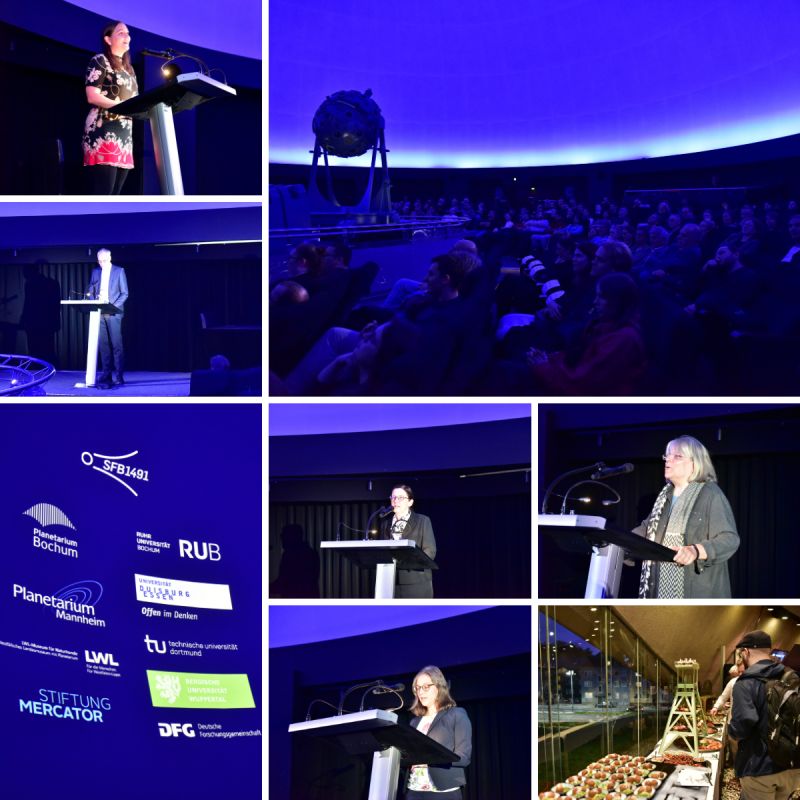
We were delighted to celebrate the 10th anniversary of the RAPP Center with some special events!
The celebrations began with a festive ceremony attended by representatives from all participating universities, including Prof. Albert
(Rector of the University of Duisburg-Essen), Prof von Keudell (Prorector of Ruhr University Bochum), and Prof. McElvany (Prorector of TU Dortmund ) .
A true highlight of the evening was the premiere of our planetarium show „Unser exotisches Universum“ (“Our Exotic Universe”), which captivated the audience with fascinating insights into the science of our CRC.
The evening concluded with a reception and refreshments, providing a wonderful opportunity for conversation and connection.
The celebrations continued with a scientific conference featuring international invited speakers, held in the unique atmosphere of the German Mining Museum „Deutsches Bergbaumuseum“.
Over two days, participants engaged in stimulating discussions covering the wide range of topics represented within the RAPP Center. The event fostered lively scientific exchange and helped to strengthen the sense of community within our research network.
We are proud of what the RAPP Center has achieved over the past decade and look forward to many more years of exciting collaboration and discovery!
Picture: Some impressions from our premiere celebration.