Project Description
Blazars have long been prime candidates for high-energy astrophysical neutrino sources. The first evidence came in 2017 with the coincident detection of a high-energy muon neutrino from TXS 0506+056 by IceCube, alongside gamma-ray signals from Fermi and MAGIC. Since then, Seyfert galaxies, such as NGC 1068, and the Galactic plane have joined as neutrino source candidates, revealing a complex picture of contributions to the diffuse neutrino flux. Many detections suggest neutrinos are produced in environments where co-produced gamma-rays are absorbed. Less than 1% of gamma-ray-emitting blazars contribute to the diffuse neutrino flux, although blazars TXS 0506+056 and PKS 1424+240 show evidence for neutrino emission in IceCube’s point source sample.In Phase 1 we improved multimessenger emission modeling using our 3D propagation software AGNPropa and developed the tool AutoMAGIC to generate long-term light curves.
For Phase 2 we will continue to explore the time-dependent spectral energy distributions of blazars by combining advanced theoretical modeling with state-of-the-art multimessenger data analyses, addressing the following questions:
- How can leptonic and hadronic emission be distinguished systematically, using the broadband multimessenger data from radio up to gamma-rays and neutrinos?
- How can we quantify the time evolution of (anti-)correlations between electromagnetic radiation from radio up to gamma-rays and neutrinos in a multimessenger ansatz?
- Is the multimessenger emission of the blazar population consistent with the diffuse flux measurements at different wavelengths, and how much do blazars contribute to the diffuse neutrino flux?
Project Publications
Show Project PublicationsPrincipal Investigators
|
Picture |
Name |
Title |
OrcID |
Institute |
Project(s) |
|---|---|---|---|---|---|
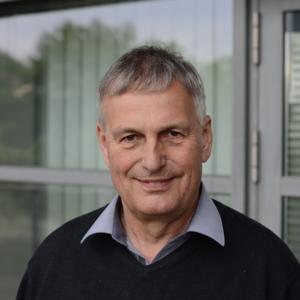
|
Prof. Dr. Dr. |
|
A1, A7, F3, F4 | ||

|
Prof. Dr. |
|
A1, A2, A3, A7, F1, Z |

Co-Investigators
|
Picture |
Name |
Title |
OrcID |
Institute |
Project(s) |
|---|---|---|---|---|---|

|
Dr. |
|
A2, A7, F5, F8, Ö | ||

|
Prof. Dr. |
|
A1, A5, A6, A7, MGK | ||

|
Dr. |
|
A1, A7, F3 |
Project Members
|
Picture |
Name |
Title |
OrcID |
Institute |
Project(s) |
|---|---|---|---|---|---|
|
|
Dr. |
|
A7 | ||
|
|
|
A7 | |||

|
|
A7, Z | |||

|
|
A7, Z | |||
|
|
|
A7 | |||

|
Dr. |
|
A7 | ||
|
|
|
A7 | |||
|
|
|
A7 | |||

|
|
A7 | |||
|
|
|
A7 | |||
|
|
A7 |